
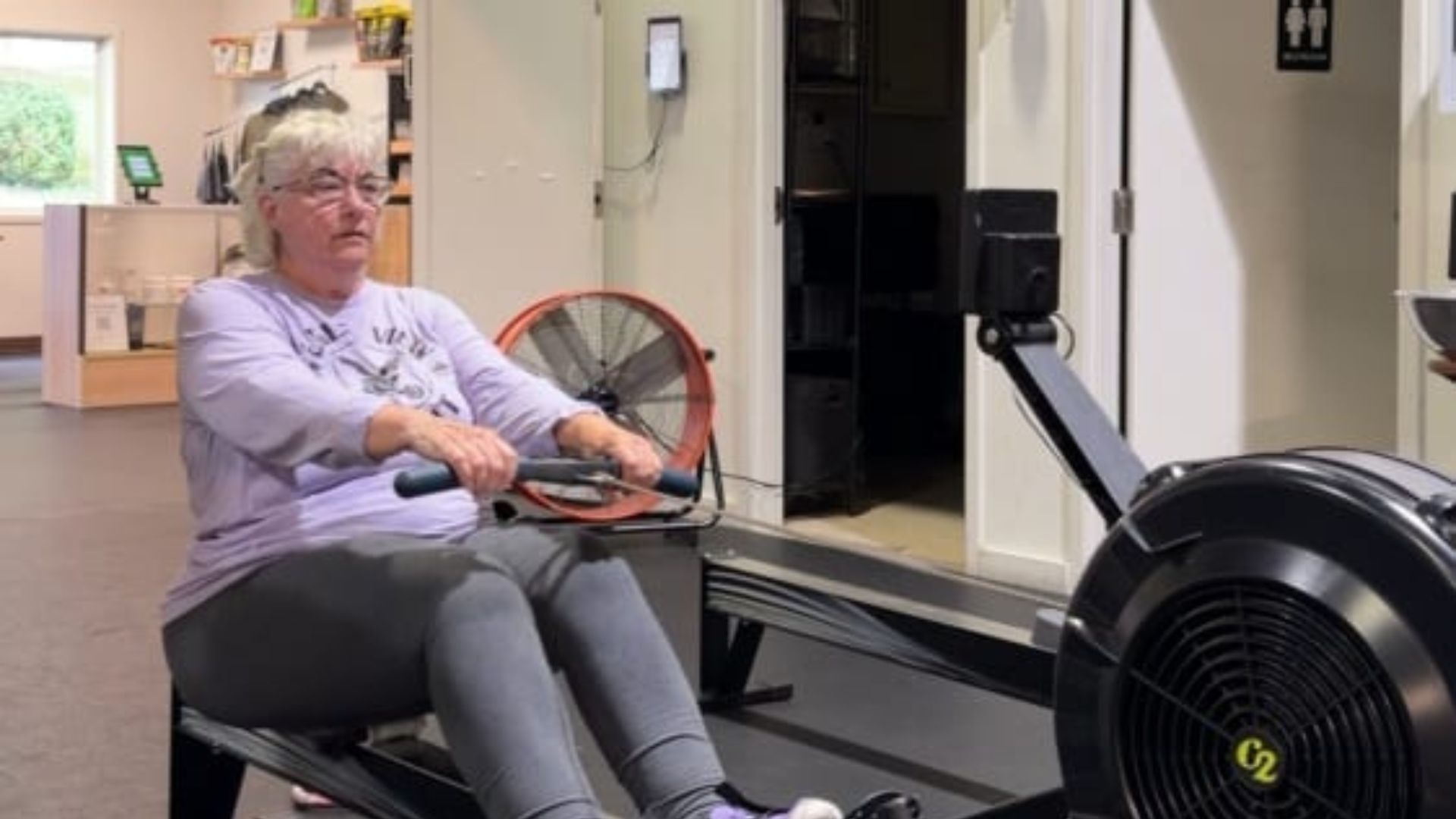
If you’re 55 or older and thinking about adding strength training to your week, you probably have a simple goal: keep doing everything you want to do. Carry your own bags. Take the stairs. Play with the grandkids. Maybe your doctor has even mentioned it. This article walks through everyday tasks and the training that supports each one, so you can picture what strength and conditioning looks like when you’re not training for competition.
What strength and conditioning means when your goal is independence
Strength and conditioning isn’t about preparing your body for competition. It’s about preparing your body for life.
Strength is about building muscle so your body is capable enough for everyday tasks, and so those tasks come easier. Think carrying the groceries, throwing a ball around with your grandkids, setting up tables and chairs for a party, walking up the stairs, or getting up off the toilet.
Conditioning helps you keep going. It improves your heart and lung stamina, which helps with breathing, heart rate, and heart health. That shows up as walking uphill, swimming with the grandchildren, gardening, walking around while you travel, or just getting through a normal day without being exhausted at the end.
Together, they help you build a body that is capable, resilient, and ready for whatever life throws your way. Aging well means maintaining muscle, endurance, balance, and mobility as we get older, and that is what keeps independence high.
You don’t have to be an athlete, have a fitness background, or know how to lift weights (that’s what we’re here for!). You simply need to start where you are.
Carrying groceries, luggage, and laundry: the carry and the hinge
Every movement in CrossFit is functional. Our classes use movements from everyday life, so what you practice in the gym translates into something useful.
A deadlift isn’t just a deadlift. It’s practice picking something heavy up off the ground safely, like a laundry basket, a box, or a piece of furniture. Farmer’s carries prepare you for more than carrying dumbbells around the gym. Think groceries, luggage, and everything else life asks you to haul. Squats prepare you for getting up and down out of a chair, out of the car, or off the toilet.
We teach people to move through their hips and other supporting muscles instead of relying entirely on the lower back when picking things up. Along the way we build grip strength, core stability, balance, and coordination. We repeat these movements so they become more natural and controlled, and eventually second nature.
We start with appropriate movements or weights and build gradually as strength and confidence improve. Every movement is adaptable. Someone brand new to exercise might start with an assisted squat or a kettlebell raised on a box, while a more experienced athlete might squat with a barbell and deadlift a heavier one. We practice in a controlled environment so you feel more confident doing these things in everyday life.
Stairs, hills, and uneven ground: squats, step-ups, and conditioning
You don’t have to be fit to start. That’s what training is for! We meet you where you are, build your capacity over time, and celebrate progress along the way.
For stairs, hills, and uneven ground, we train squats, step-ups on a box or a low object, and sled work (pushing, pulling, and walking backwards). We also sprinkle in different kinds of cardio. Sometimes that’s a short piece meant to get your heart rate up. Sometimes it’s moderate. Sometimes it’s a long piece where the goal is longevity and a steady outcome. Training in a variety of ways, with different types of strength and muscle work, builds more support for anything life throws at you.
Getting up from the floor without a struggle
We want to build confidence, not create fear. One way we do that is by practicing getting down to and up off the floor.
When burpees are on the board, it may mean a modified version. Instead of going all the way to the floor, you might place your hands on a bench or box, step one foot back at a time, lie down, and return to standing, using the bench for support as needed. The goal is to keep your independence and confidence with everyday movements, and with some that aren’t everyday but still support independence in those golden years.
Jump rope is another good example. When is the last time you jumped rope? Lots of people say decades ago, maybe middle school. Jump rope isn’t always about jumping. It’s about how we pivot when balance is off and how we react to fast moving objects around us. For older athletes, we may skip the rope entirely and work on quick foot movements, stepping patterns, coordination, and regaining balance while moving.
We want you to feel confident getting down to the floor, getting back up, and moving through life without hesitation. You don’t have to jump, move fast, or get on the floor to get a great workout. We can meet you where you are and build from there.
Why doctors suggest strength training for heart and bone health
When someone tells us their doctor recommended strength training, we get excited, because we know it’s the foundation for long-term health.
Conditioning helps train your heart and cardiovascular system to work more efficiently. As your fitness improves, your heart may be able to deliver oxygen through your body with fewer beats at a given workload, and life (including your workouts) can feel easier.
Strength training places healthy, controlled demands on bones and muscles. Weight-bearing and impact activities, such as jumping rope, jumping over objects, or jumping down from low heights, can also give a beneficial stimulus for bone health. Bone density becomes more important as we age, and maintaining strength and bone health can play a role in staying active and independent. Muscle that supports the body and skeleton helps us stay upright and active as we get older.
If you’re new to our gym with these goals, we start with what you can safely and comfortably do. Then we build strength and conditioning gradually and modify impact when needed. Not everyone needs to jump to benefit from strength training.
What a beginner-friendly strength and conditioning session can look like
Every class is one hour. On your first day, we encourage you to arrive a few minutes early so we can welcome you, show you around, get you comfortable, and ask about any injuries we should know about for the day. Each class is led by a trained coach who knows how to scale movements for different ages, abilities, fitness levels, and injuries. You’re never expected to figure things out on your own.
Most classes have around 10 to 15 people, so coaches can give individual attention and feedback. It’s like personal training, with cues for everyone throughout class, except you get to do it alongside others, which makes it more fun.
Here is how class works:
- Whiteboard brief: We review the day’s workout, movements, goals, and expectations.
- Warm-up: We get moving, practice movement patterns, and work on form. Coaches give corrections and guidance along the way.
- Movement review: We demonstrate each exercise and explain options and modifications.
- Workout: Your coach helps select appropriate weights, adjust movements, and decide when you need rest. Modifications can even be specific to how you’re feeling that day. We often do a strength component and a conditioning component that may use the movements from strength. We do 1 to 3 movement pieces in a day.
- Coaching throughout: Your coach is there to encourage, guide, and help you get the most out of your hour.
Our community and coaches are welcoming, encouraging, and full of energy. Members range from 13 to 70 years old, with all kinds of fitness backgrounds and abilities. People get to know each other and celebrate each other’s progress. Nobody expects you to keep up with the person next to you. Everyone has their own workout, their own weights, and their own goals.
Where everyday Purcellville life fits in
One of the things we love about the Purcellville area is how much there is to do outdoors and around the community. Our members enjoy local farmers markets, community fairs, and visits to nearby farms, breweries, and wineries.
Outdoor life is a big part of living here, including walking and biking the W&OD Trail and hiking sections of the Appalachian Trail. Families also enjoy Franklin Park, from baseball and swimming to frisbee golf and pickleball.
These are good examples of why strength, endurance, balance, and mobility matter beyond the gym. We want our members strong enough to enjoy all of it, whether that’s a weekend hike, a bike ride on the W&OD, playing with the grandkids at Franklin Park, or a full day out without feeling exhausted.
Questions to ask before you start, and how to take a first step
Start with a free intro. One of our trusted team members will give you a call, learn a little more about your goals, and help get you set up for your first class. Just arrive a few minutes early with a water bottle and your workout shoes. We’ll take it from there.


